


Many organizations struggle to convert their vast stores of raw data into actionable strategies, often leaving valuable insights untapped. Data Analytics Using Python offers a strong and flexible solution, transforming complex datasets into clear, decision-driving intelligence for businesses across all sectors.
Key Takeaways
- Python’s extensive ecosystem of libraries like Pandas and NumPy makes it indispensable for data manipulation and analysis.
- A structured workflow, from data acquisition to communication, ensures reliable and impactful analytical outcomes.
- Effective data cleaning and exploratory data analysis (EDA) are critical for accurate insights, often consuming the majority of project time.
- Data visualization tools like Matplotlib and Seaborn are essential for clearly presenting complex findings to stakeholders.
- Ethical considerations and continuous learning are vital for any professional performing data analytics in 2026.
The Python Advantage for Data Analytics
Python has solidified its position as the go-to programming language for data analytics due to its simplicity, versatility, and a vast ecosystem of open-source libraries. Its readability allows analysts to write clear, concise code, accelerating development and collaboration on complex projects.
The language integrates seamlessly with various data sources, from databases to web APIs, making data acquisition straightforward. Beyond that, Python’s strong community support ensures constant updates and a wealth of resources for troubleshooting and learning.
This widespread adoption means a high demand for Python-proficient data analysts in the job market, as of June 2026. Companies value professionals who can not only manipulate data but also build end-to-end analytical solutions.
Essential Libraries for Python Data Analytics
The power of Python for data analytics stems from its specialized libraries, each designed for specific tasks. These tools simplify complex operations, making advanced analysis accessible.
NumPy, or Numerical Python, provides fundamental support for large, multi-dimensional arrays and matrices, along with a collection of high-level mathematical functions to operate on these arrays. It forms the backbone for many other scientific computing libraries.
Pandas is arguably the most critical library for data analysts, offering powerful data structures like Data Frames for efficient data manipulation and analysis. It excels at tasks such as data cleaning, merging, filtering, and aggregation.

Matplotlib and Seaborn are indispensable for data visualization. Matplotlib provides a foundational plotting library, while Seaborn builds on it to offer a higher-level interface for drawing attractive and informative statistical graphics. These libraries are crucial for turning numerical insights into compelling visual stories.
Scikit-learn is the primary library for machine learning, providing simple and efficient tools for data mining and data analysis. It covers classification, regression, clustering, model selection, and preprocessing, enabling predictive analytics with Python.
Data Acquisition and Preprocessing in Python
The journey of data analytics often begins with obtaining and preparing the data, a phase that can consume a significant portion of project time. Python’s versatility simplifies this crucial step.
Data acquisition involves connecting to various sources, which Python handles effortlessly using libraries like Pandas (for CSV, Excel, SQL databases) or specific connectors for cloud storage and APIs. Once acquired, raw data is rarely pristine.
Preprocessing, or data cleaning, addresses missing values, inconsistencies, and incorrect formats. Pandas offers strong functions like .fillna(), .dropna(), and .replace() for handling missing data, and type conversion methods to ensure data integrity. According to a 2025 survey by Statista, data professionals spend approximately 45% of their time on data preparation tasks.
For example, if a dataset contains inconsistent entries for a ‘country’ column (e.g., ‘USA’, ‘U.S.’, ‘United States’), Python allows for quick standardization to a single format. This meticulous cleaning prevents skewed analysis later on.
Exploratory Data Analysis (EDA) with Python
After cleaning, EDA helps analysts understand the data’s main characteristics, often with visual methods. This step is critical for forming hypotheses and identifying patterns before formal modeling.
Python’s Pandas library provides powerful methods like .describe() for summary statistics, .info() for data types and non-null counts, and .value_counts() for categorical distributions. These functions offer immediate insights into the data’s structure and quality.
Visualization tools are central to EDA. Histograms reveal data distribution, scatter plots show relationships between variables, and box plots highlight outliers. For instance, creating a histogram of customer ages can quickly show if the dataset is skewed towards younger or older demographics.
A unique insight here is the importance of domain knowledge during EDA. Without understanding the business context, identifying true anomalies versus expected variations becomes challenging. An unexpected peak in sales data might be an error, or it could be a highly successful promotional event.
Statistical Analysis and Predictive Modeling
Once data is understood, Python facilitates deeper statistical inquiry and the development of predictive models. These advanced techniques help forecast future trends and identify key drivers.
Libraries like SciPy and Stats Models offer advanced statistical functions, including hypothesis testing, regression analysis, and time series modeling. For example, a marketing team might use Stats Models to perform a multiple linear regression to understand how advertising spend across different channels impacts sales revenue.
For predictive modeling, Scikit-learn is indispensable. It provides algorithms for various tasks: classification (e.g., predicting customer churn), regression (e.g., forecasting housing prices), and clustering (e.g., segmenting customers). Building a customer churn prediction model, for example, involves training a classifier on historical data to identify at-risk customers.
The drawback here is that model building requires careful validation to avoid overfitting. Overfitting occurs when a model performs well on training data but poorly on new, unseen data, leading to unreliable predictions. Cross-validation techniques are essential to mitigate this.
Data Visualization: Communicating Insights
Effective data analytics is incomplete without compelling data visualization. Python’s libraries transform raw numbers into understandable and impactful visuals, making insights accessible to a broader audience.
Matplotlib provides fine-grained control over plots, ideal for custom visualizations. Seaborn, building on Matplotlib, simplifies the creation of complex statistical charts like heatmaps, pair plots, and violin plots with minimal code.
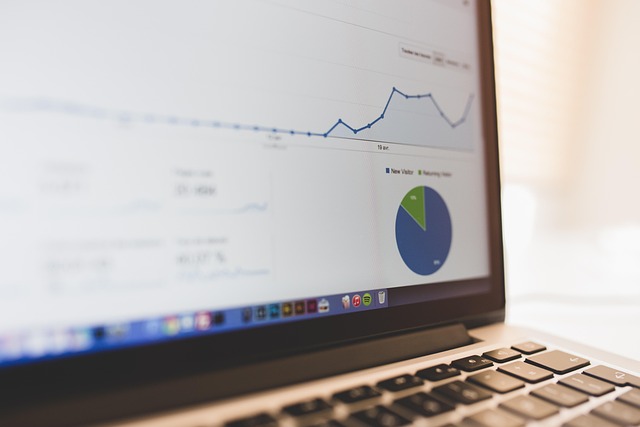
The key is to choose the right visualization for the story you want to tell. A line chart is perfect for showing trends over time (e.g., website traffic month-over-month), while a bar chart excels at comparing discrete categories (e.g., sales by product line).
Beyond static plots, interactive visualization libraries like Plotly or Bokeh allow stakeholders to explore data dynamically. This interactivity significantly enhances engagement and comprehension, enabling users to drill down into specific data points or filter views.
A Practical Data Analytics Project Workflow
A structured approach to data analytics ensures efficiency and reliable results. Here’s a typical workflow when tackling a project using Python:
- Define Objectives: Clearly state the business problem or question to be answered. For example, “Identify factors contributing to customer churn and predict future churn risk.”
- Data Acquisition: Collect relevant data from databases, APIs, or files. This might involve querying a SQL database for customer transaction history and demographics.
- Data Cleaning & Preprocessing: Handle missing values, correct inconsistencies, and transform data into a suitable format. This often involves extensive use of Pandas for data manipulation.
- Exploratory Data Analysis (EDA): Summarize and visualize data to understand its characteristics, identify patterns, and detect outliers. Use Matplotlib and Seaborn to create initial plots.
- Feature Engineering: Create new variables from existing ones to improve model performance. For instance, calculating ‘customer tenure’ from ‘sign-up date’ and ‘current date’.
- Model Building & Evaluation: Select and train appropriate statistical or machine learning models (e.g., logistic regression for churn prediction using Scikit-learn). Evaluate model performance using metrics like accuracy, precision, and recall.
- Interpretation & Communication: Translate analytical findings into clear, actionable insights for stakeholders, often using visualizations and concise reports. Present the factors most strongly correlated with churn.
- Deployment & Monitoring: Integrate the model into a live system to make predictions and continuously monitor its performance, retraining as new data becomes available.
Real-World Applications of Python Data Analytics
Python’s versatility extends to countless real-world scenarios, driving significant value across industries. Its ability to handle diverse data types and complex computations makes it a powerful tool for solving specific business challenges.
In retail, Python is used for market basket analysis, identifying products frequently purchased together to optimize store layouts and personalized recommendations. For instance, an e-commerce platform might find that customers buying coffee also frequently purchase milk and sugar, leading to targeted promotions. This can increase average order value by 15-20% according to internal retail analytics reports as of 2026.
Financial institutions employ Python for fraud detection, building models that analyze transaction patterns to flag suspicious activities in real-time. A model trained on historical fraudulent transactions can identify anomalies in new transactions, preventing potential losses. S4 Hana Fico in 2026: Mastering Real-Time Finance
Healthcare leverages Python for analyzing patient data to identify disease patterns, predict patient outcomes, and optimize resource allocation. Researchers might use it to analyze large genomic datasets to discover new biomarkers for diseases. The flexibility allows for rapid prototyping and iteration.
Data Analytics Tool Comparison
When working with Data Analytics Using Python, understanding the primary roles of key libraries is crucial:
| Feature | Pandas | NumPy | Scikit-learn |
|---|---|---|---|
| Primary Function | Data manipulation, cleaning, aggregation | Numerical computing, array operations | Machine learning, predictive modeling |
| Core Data Structure | DataFrame, Series | ndarray (N-dimensional array) | Data structures from NumPy/Pandas |
| Typical Use Cases | CSV import, data merging, group by, pivot tables | Vectorized math, linear algebra, Fourier transforms | Classification, regression, clustering, model selection |
| Learning Curve | Moderate | Low to Moderate | Moderate to High |
| Integration | Often used with NumPy, Matplotlib | Foundation for Pandas, SciPy | Built on NumPy, SciPy, Matplotlib |
Pros and Cons of Python for Data Analytics
Advantages
- Versatile Ecosystem: Unmatched range of libraries for every analytical task.
- Ease of Learning: Relatively simple syntax compared to other programming languages.
- Strong Community Support: Abundant resources, tutorials, and active forums.
- Scalability: Can handle large datasets, especially when combined with specialized tools.
- Integration: Connects easily with databases, web services, and other systems.
Drawbacks
- Performance for Large Scale: Can be slower than compiled languages like C++ for very large datasets without optimization.
- Memory Usage: Can be memory-intensive for massive data, requiring careful coding.
- Steeper Initial Curve: Requires coding knowledge, unlike GUI-based analytics tools.
- Dependency Management: Managing library versions and environments can be complex.
- Deployment Complexity: Deploying Python-based solutions can sometimes be more involved than compiled binaries.
Common Mistakes in Python Data Analytics
Even experienced analysts can stumble, but recognizing common pitfalls helps ensure more accurate and reliable results. Avoiding these mistakes is crucial for successful Data Analytics Using Python projects.
One frequent error is inadequate data cleaning. Rushing this step can lead to analyses based on incorrect or incomplete data, yielding misleading insights. For example, failing to handle duplicate records in a customer database can inflate customer counts and distort metrics.
Another mistake is neglecting exploratory data analysis (EDA). Jumping directly into modeling without understanding data distributions, outliers, or relationships often leads to using inappropriate models or misinterpreting results. A solution is to dedicate sufficient time to visualize and summarize data before any formal analysis.
Overfitting models is a significant problem in predictive analytics. This occurs when a model learns the training data too well, including its noise, performing poorly on new data. To mitigate this, always split your data into training and testing sets and use cross-validation techniques.
Tips and Best Practices for Data Analytics with Python
To excel in Data Analytics Using Python, adopting certain practices can significantly enhance your workflow and the quality of your insights. These expert insights go beyond basic tool usage.
Version Control is Key: Always use Git for version control. Data Analytics Using Python allows you to track changes to your code, collaborate effectively with teams, and revert to previous versions if issues arise. It’s especially useful for documenting the evolution of your analytical models.
Structured Project Layout: Organize your projects with a clear folder structure (e.g., `data/`, `notebooks/`, `src/`, `reports/`). This improves reproducibility and makes it easier for others (or your future self) to understand your work.

Document Everything: Use comments in your code, write clear doc strings for functions, and maintain detailed README files for your projects. Explain your assumptions, data sources, transformations, and model choices. This transparency is vital for trustworthiness and collaboration.
Focus on Data Storytelling: Beyond just presenting numbers and charts, learn to weave a compelling narrative around your data. Explain the ‘so what?’ and ‘now what?’ to your audience. A strong story ensures your insights lead to action.
Continuous Learning: The field of data analytics is constantly evolving. Stay updated with new libraries, techniques, and best practices. Follow influential data scientists and participate in online communities.
Frequently Asked Questions
What are the primary Python libraries for data analysis?
The primary Python libraries for data analysis include Pandas for data manipulation, NumPy for numerical operations, Matplotlib and Seaborn for data visualization, and Scikit-learn for machine learning and predictive modeling. These form the core toolkit for most analytical tasks.
How long does it take to learn Data Analytics Using Python?
The time to learn Data Analytics Using Python varies, but a solid foundation can be achieved in 3–6 months with dedicated study. Mastering it requires continuous practice and working on real-world projects, which can take a year or more to gain proficiency.
Is Python better than R for data analytics?
Both Python and R are powerful for data analytics, each with strengths. Python is generally preferred for its versatility, integration with production systems, and machine learning capabilities. R excels in statistical modeling and specialized academic research. The choice often depends on project requirements and existing skill sets.
What kind of jobs can I get with Python data analytics skills?
With strong Data Analytics Using Python skills, you can pursue roles such as Data Analyst, Business Intelligence Analyst, Data Scientist (entry-level), Machine Learning Engineer (entry-level), and Quantitative Analyst. Many companies, from startups to large enterprises, seek these skills as of June 2026.
How important is data cleaning in Python analytics?
Data cleaning is critically important in Python analytics, often consuming a significant portion of project time. Without thorough cleaning, analysis can be based on inaccurate, inconsistent, or incomplete data, leading to flawed insights and poor business decisions.
Can Python be used for big data analytics?
Yes, Python can be used for big data analytics, especially when integrated with big data frameworks like Apache Spark (using PySpark). While Python itself may not be the fastest for raw processing of petabytes of data, its libraries provide powerful interfaces for distributed computing.
Conclusion
Data Analytics Using Python is more than just a technical skill; it’s a strategic capability that empowers individuals and organizations to make data-driven decisions. By mastering essential libraries, understanding a structured workflow, and adhering to best practices, analysts can unlock profound insights from complex data. Embrace Python to transform raw numbers into compelling narratives and drive tangible business value.
Information current as of June 2026; pricing and product details may change.
Editorial Note: This article was researched and written by the KASYFY editorial team. We fact-check our content and update it regularly. For questions or corrections, contact us. Knowing how to address Data Analytics Using Python early makes the rest of your plan easier to keep on track.
Related read: Why Pure Acetic Acid Is Called Glacial Acetic Acid.