
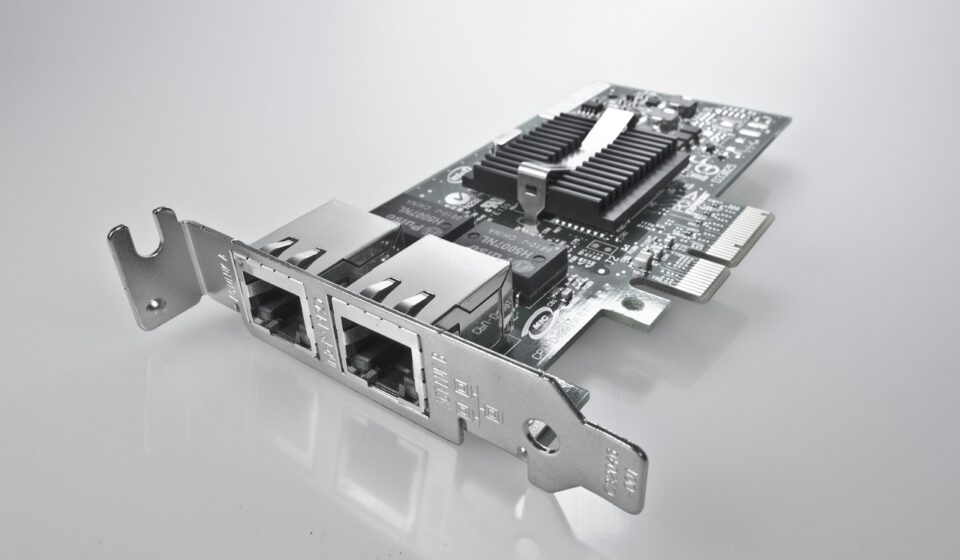

A Token Ring is a local area network (LAN) topology defined by IEEE 802.5 where devices connect in a physical star through a central hub but pass data in a logical ring. A special three-byte frame called a token continuously circulates around the network, allowing only the device holding the token to transmit data and preventing network collisions.
Developed by IBM in 1984 and later standardized as IEEE 802.5, Token Ring provided a deterministic, controlled access environment that guaranteed bandwidth allocation and transmission order for enterprise computing systems. While Ethernet eventually came to dominate office networking due to lower hardware costs and faster throughput evolution, Token Ring remains one of the most sophisticated local network protocols ever engineered.
- Token Ring is a local area network protocol defined by the IEEE 802.5 standard, originally introduced by IBM in 1984.
- It operates as a logical ring using a token-passing access method to provide deterministic, collision-free data transmission.
- Devices connect to a central Multistation Access Unit (MAU) in a physical star layout using electromechanical relays.
- Token Ring networks run at operational speeds of 4 Mbps and 16 Mbps, with a later 100 Mbps High-Speed Token Ring (HSTR) standard.
- Network access relies on designated Active and Standby Monitors to manage ring timing, token generation, and fault recovery.
- Ethernet’s lower hardware costs, rapid speed increases, and switched micro-segmentation eventually made Token Ring obsolete.
How Token Ring networks function
The core operation of a Token Ring network relies on a single control packet—the token—traversing the ring from node to node in one direction. When no station has data to send, a 3-byte free token continuously circles the logical loop. When a network interface card (NIC) receives the free token, it can claim the token or pass it along to the next downstream neighbor within a fixed token holding time.
To transmit data, your workstation waits until the free token arrives, grabs the 3-byte token, and alters its status bit from 0 (free) to 1 (busy). Your card then appends destination and source MAC addresses, frame control details, payload data, and a frame check sequence (FCS) CRC code, converting the token into an active data frame.
The transmission process follows these specific technical stages:
- Token Capture: The sending node receives the 3-byte token, changes the token bit in the Access Control byte from 0 to 1, and appends the frame header and payload.
- Ring Traversal: The frame travels sequentially through every active station on the ring. Each node checks the destination address field, regenerates the signal, and retransmits the bits to its downstream neighbor.
- Data Copying: When the frame reaches the intended recipient, that node copies the payload into its buffer. It modifies the Frame Status (FS) byte at the end of the frame, flipping the Address Recognized (A) bit and Frame Copied (C) bit to 1.
- Frame Stripping: The frame completes its circuit around the logical ring and returns to the originating sender. The sender verifies the A and C bits in the Frame Status byte to confirm delivery, strips the data payload, and generates a new free token.
In standard 4 Mbps Token Ring networks, the transmitting station waits for its frame to return entirely before generating a new free token. In 16 Mbps networks, a feature known as Early Token Release (ETR) allows the sending station to release a new free token immediately after finishing frame transmission, without waiting for the frame header to make the full loop back. ETR significantly improves network throughput on longer rings with high physical latency.
The role of the Active Monitor and Standby Monitors
Every Token Ring network requires a central management mechanism to maintain physical ring stability, clock synchronization, and frame timing. Token Ring handles this dynamically by electing one station on the network as the Active Monitor (AM), while all other connected stations operate as Standby Monitors (SM).
When the ring initializes, or when an existing Active Monitor drops off the network, connected stations enter a contention process called the Claim Token phase. Each station transmits Claim Token frames containing its MAC address. The node with the highest physical MAC address wins the election and assumes the Active Monitor role.
The Active Monitor performs several essential management functions:
- Master Clock Source: The Active Monitor provides the master system clock that synchronizes signal timing across every network card on the ring, preventing clock drift.
- Ring Delay Buffer: A 3-byte token requires at least 24 bit-times of physical delay to circulate properly. If a small ring lacks sufficient cable length and node delays to hold 24 bits, the Active Monitor inserts a 24-bit elastic buffer into the ring circuit.
- Lost Token Recovery: The Active Monitor runs a token timer. If no valid token or frame passes the monitor within a designated timeframe (typically 10 milliseconds), the Active Monitor purges the ring and issues a fresh free token.
- Orphan Frame Purging: If a transmitting node disconnects or crashes mid-transmission, its frame could circulate indefinitely. The Active Monitor sets a Monitor Bit (M bit) in the Access Control field to 1 when a frame passes it. If a frame passes the Active Monitor a second time with the M bit already set to 1, the Active Monitor purges the orphaned frame and releases a new token.
- Neighbor Notification (Ring Poll): Every 7 seconds, the Active Monitor broadcasts an Active Monitor Present (AMP) frame. Downstream stations process this frame, identify their Upstream Neighbor Address (UNA), and reply with Standby Monitor Present (SMP) frames, allowing the ring to build a complete network topology map.
Inside the Token Ring frame structure
Token Ring uses two distinct frame structures: a 3-byte token frame used to grant media access, and an expanded data/command frame used to transfer payload data and ring management commands.
The 3-byte token frame format
The control token consists of three single-byte fields totaling 24 bits:
- Starting Delimiter (SD – 1 byte): Contains unique non-data code violations in Manchester encoding that signal the start of a frame.
- Access Control (AC – 1 byte): Contains Priority bits (P2-P0), the Token bit (T: 0 for free token, 1 for frame), the Monitor bit (M), and Reservation bits (R2-R0).
- Ending Delimiter (ED – 1 byte): Contains code violations marking the frame boundary, along with error-detected (E) and intermediate-frame (I) flags.
The data and command frame format
When a station converts a free token into an active data transmission, it appends additional fields between the Access Control byte and the Ending Delimiter:
| Field Name | Size | Function and Purpose |
|---|---|---|
| Starting Delimiter (SD) | 1 Byte | Marks the beginning of the frame using specific physical encoding patterns. |
| Access Control (AC) | 1 Byte | Manages 8 priority levels, token availability status, and Active Monitor checks. |
| Frame Control (FC) | 1 Byte | Identifies whether the frame carries MAC management data or LLC upper-layer user data. |
| Destination Address (DA) | 6 Bytes | Specifies the physical 48-bit MAC address of the intended receiving station. |
| Source Address (SA) | 6 Bytes | Specifies the 48-bit MAC address of the station generating the frame. |
| Information Payload | Variable | Carries application data up to 4,472 bytes (4 Mbps) or 17,800 bytes (16 Mbps). |
| Frame Check Sequence (FCS) | 4 Bytes | 32-bit cyclic redundancy check (CRC) to verify data integrity across the frame. |
| Ending Delimiter (ED) | 1 Byte | Signals frame termination and contains failure indicators. |
| Frame Status (FS) | 1 Byte | Contains duplicate Address Recognized (A) and Frame Copied (C) confirmation bits. |
How a device joins the ring: The 5-phase insertion process
When you plug a network card into a Token Ring network and boot the computer, the hardware does not immediately route traffic into the live ring. To prevent corrupting active token passing, the card executes a strict 5-phase initialization sequence:
- Phase 0: Lobe Media Check: The network adapter transmits test frames out its transmitter wire pair and receives them back on its receiver wire pair. This verifies that the lobe cable between the workstation and the central unit has no electrical short circuits or broken conductors.
- Phase 1: Physical Insertion: The network card applies a direct current (DC) phantom voltage (5V DC) down the lobe cable to the hub port. This voltage energizes an electromechanical relay inside the central hub, opening the relay and inserting the station directly into the physical ring circuit.
- Phase 2: Duplicate Address Verification: The station sends out Duplicate Address Test frames addressed to its own MAC address. If another device on the ring responds with the Address Recognized bit set, a MAC collision exists, and the new station immediately opens its relay and drops off the ring to prevent conflicts.
- Phase 3: Participation in Ring Poll: The station waits for an Active Monitor Present (AMP) or Standby Monitor Present (SMP) frame from its upstream neighbor. It records its neighbor’s MAC address as its Upstream Neighbor Address (UNA) and broadcasts its own SMP frame to inform downstream nodes.
- Phase 4: Request Initialization: The station transmits a Request Initialization frame to a Ring Parameter Server (RPS) on the network to obtain optimal timer settings, soft error thresholds, and ring number parameters before processing live data.
Physical star, logical ring: The MAU explained
While Token Ring operates logically as a circular loop, cabling a physical building in a continuous wire ring creates severe single-point-of-failure risks. If one cable snaps, the entire network fails. To solve this, IBM designed the Multistation Access Unit (MAU or MSAU), creating a physical star, logical ring topology.
Workstations connect directly to ports on the central MAU using flexible lobe cables. Inside the MAU, each port features an electromechanical relay. When a computer turns on, phantom DC voltage forces the relay switch open, routing the incoming ring signal through the computer’s NIC and back out into the MAU’s internal loop path.
If you unplug a cable, turn off a PC, or experience a broken wire, the phantom voltage drops. The spring-loaded relay inside the MAU snaps shut in milliseconds, bypassing the inactive port and preserving the continuous logical ring for all remaining connected devices.
To connect multiple offices or equipment racks, MAUs feature dedicated Ring In (RI) and Ring Out (RO) trunk ports. You connect the Ring Out port of the first MAU to the Ring In port of the second MAU using twisted-pair or fiber-optic trunk cables, creating a larger compound ring topology spanning multiple wiring closets.
Token Ring vs Ethernet: A technical comparison
During the 1980s and 1990s, Token Ring and Ethernet represented two fundamentally different approaches to local area networking. Token Ring relied on deterministic access control, ensuring every station received a guaranteed turn to speak. Ethernet relied on contention-based access using Carrier Sense Multiple Access with Collision Detection (CSMA/CD), where stations attempted transmission whenever the line seemed clear.
| Feature | Token Ring (IEEE 802.5) | Early Ethernet (IEEE 802.3) |
|---|---|---|
| Access Method | Token Passing (Deterministic) | CSMA/CD (Contention-based) |
| Collision Handling | Collision-free by design | Collisions detected; backoff timer applied |
| Performance Under High Load | Stable throughput (~90-95% efficiency) | Degrades due to collision retransmissions |
| Bandwidth Speeds | 4 Mbps, 16 Mbps, 100 Mbps (HSTR) | 10 Mbps, 100 Mbps, 1 Gbps, 10 Gbps+ |
| Cabling Requirement | Shielded Twisted Pair (STP Type 1) or UTP | Unshielded Twisted Pair (UTP Cat3/Cat5) or Coaxial |
| Hardware Cost | High (Complex NIC controller ASICs, MAUs) | Low (Simple single-chip NICs, standard hubs) |
| Physical Topology | Star wired through central MAU | Bus (Coaxial) or Star (Hub/Switch) |
| Built-in Priority | 8 hardware priority levels | None (Flat access model) |
Under light network utilization, early 10 Mbps Ethernet achieved low latency because nodes transmitted immediately without waiting for a token.
Why Token Ring faded out: Cost, complexity, and speed limits
Despite its technical superiority in collision prevention and bandwidth management under load, Token Ring lost the market standard war to Ethernet by the late 1990s. This outcome was driven by three primary commercial and engineering factors:
1. Prohibitive hardware costs
Token Ring interface cards required complex onboard microprocessors and specialized Application-Specific Integrated Circuits (ASICs) to manage ring insertion state machines, Active Monitor elections, and token timing. In the early 1990s, a Token Ring NIC cost between $500 and $800, while a basic Ethernet card cost under $100. Similarly, active MAUs were substantially more expensive than standard Ethernet hubs.
2. Cabling and infrastructure complexity
IBM originally specified heavy Shielded Twisted Pair (STP Type 1) cable with bulky, proprietary IBM Data Connectors (IDC) for Token Ring installations. Wiring a facility with thick STP cable was difficult, stiff, and costly. Although IEEE later updated 802.5 to support Category 3 and Category 5 Unshielded Twisted Pair (UTP) over DB9 or RJ45 connections, Ethernet had already established a dominant lead using cheap, flexible Cat5 UTP cabling.
3. Rapid Ethernet evolution and switched micro-segmentation
Ethernet vendors pushed speed milestones rapidly. While Token Ring struggled for years to transition from 4 Mbps to 16 Mbps, Fast Ethernet introduced 100 Mbps throughput in 1995 at competitive prices. By the time High-Speed Token Ring (HSTR) reached 100 Mbps in 1998, Gigabit Ethernet (1000 Mbps) was already entering enterprise datacenters.
Crucially, the invention of full-duplex network switches permanently eliminated Ethernet’s biggest technical weakness: collisions. By giving every device a dedicated full-duplex switch port connection, micro-segmented Ethernet achieved collision-free, deterministic transmission without any of the protocol overhead or hardware costs associated with token passing.
Common challenges and troubleshooting in Token Ring
Maintaining a functional Token Ring environment required specialized diagnostic knowledge to isolate hardware failures, cabling issues, and timing errors.
Ring beaconing and fault domain isolation
When a physical link break occurs (such as a severed lobe cable or damaged adapter), stations lose signal synchronization. The first downstream station that detects a loss of signal enters a diagnostic state called Beaconing.
The beaconing node repeatedly broadcasts Beacon frames containing its own MAC address and its Nearest Active Upstream Neighbor (NAUN) address. This isolates the failure to a specific fault domain—the segment between the beaconing node and its upstream neighbor. Network management tools inspect the beacon frames, identify the two affected ports on the MAU, and signal the MAU relay to bypass the failing segment automatically.
Lost tokens and active monitor lockup
If an Active Monitor fails or experiences an electrical glitch, the ring can lose its master clock or drop the token entirely. When Standby Monitors detect an absent token timer expiration, they initiate the Claim Token process to elect a new Active Monitor. If multiple faulty cards continuously trigger claim token cycles, the ring experiences severe performance instability, requiring manual isolation of the misbehaving NIC.
Ring speed mismatches
Token Ring operates at fixed operational rates (either 4 Mbps or 16 Mbps). If an engineer accidentally connects a network card configured for 16 Mbps into a 4 Mbps ring, the mismatched clock speed corrupts the continuous data stream. Early MAUs could not detect speed mismatches automatically, resulting in ring beaconing until the incorrect node was disconnected or manually reconfigured.
Stuck mechanical relays
Because MAUs rely on mechanical relay switches to insert and bypass ports, legacy units frequently suffered from stuck relay contacts. If an inactive port relay failed to close when a cable was pulled, the logical ring remained open, halting traffic for all users. System administrators carried specialized manual reset tools—often referred to as relay field chargers—that applied a short 9V DC pulse directly across the port pins to unstick the internal relay mechanism.
Real-world applications and lasting legacy
In its peak market adoption period during the late 1980s and early 1990s, Token Ring formed the backbone of enterprise corporate infrastructure. IBM’s dominant position in enterprise mainframe computing made Token Ring the natural connection architecture for Systems Network Architecture (SNA) environments, 3270 terminal emulation clusters, and financial transaction processing systems.
Financial institutions, stock exchanges, automated manufacturing facilities, and airline reservation centers relied heavily on Token Ring because network downtime or unpredictable transmission latency directly caused monetary loss. In these mission-critical facilities, Token Ring’s deterministic guarantees outweighed its higher hardware purchase price.
Although Token Ring hardware is obsolete for general enterprise local area networks today, its underlying control concepts strongly influenced modern networking protocols:
- Quality of Service (QoS) and Traffic Prioritization: Token Ring’s 8-level priority reservation mechanism laid the theoretical groundwork for modern IEEE 802.1p class-of-service tagging and Differentiated Services Code Point (DSCP) traffic shaping in IP networks. For database scaling strategies, see Oracle 11g RAC: Unveiling Its Enduring Role.
- Resilient Ring Topologies: High-speed optical backbone standards such as Fiber Distributed Data Interface (FDDI) and Resilient Packet Ring (IEEE 802.17) directly adapted Token Ring’s dual-counter-rotating ring design for metropolitan area networks.
- Deterministic Industrial Networking: Real-time industrial automation platforms, including Time-Sensitive Networking (TSN), EtherCAT, and Profinet, utilize deterministic scheduling concepts originating from token-passing models to control robotics and assembly lines without delay jitter. For enterprise resource planning infrastructure, check Microsoft Dynamic Ax Supply Chain: From Legacy.
- Design Systems and Engineering Contexts: Analyzing structural flow and redundancy in complex enterprise networks shares parallels with structural engineering systems detailed in Revit Architecture: Mastering Design and Avoiding Pitfalls.
Historical network analysis and architectural trade-offs
Studying Token Ring offers critical lessons in network architecture trade-offs between theoretical protocol efficiency and broad commercial adoptability. Token Ring was technically superior in multi-access control, bandwidth equity, and signal isolation under heavy workloads. However, Ethernet won the LAN market because it prioritized simplicity, lower manufacturing overhead, and modular scalability.
Ethernet accepted localized collisions and random retransmission backoffs in exchange for simple, inexpensive hardware components that any vendor could produce without licensing barriers. As silicon prices dropped and switching technology evolved, Ethernet overcame its early structural limitations through raw hardware performance rather than complex protocol orchestration.
Frequently asked questions
What is the primary function of a token in a Token Ring network?
The primary function of a token is to regulate media access by granting explicit permission to transmit data. Only the station currently holding the 3-byte free token can send data across the network, ensuring collision-free and deterministic communication.
Why was Token Ring considered more reliable than early Ethernet?
Early half-duplex Ethernet used CSMA/CD, which suffered from frequent collisions and degraded transmission speeds when network traffic surged.
How did a Multistation Access Unit (MAU) prevent ring failure when a device disconnected?
The MAU contained internal electromechanical relays for each port. Connected workstations supplied a continuous 5V DC phantom current down the cable to hold the relay open; if a device powered down or was unplugged, the voltage dropped, causing the relay to instantly close and bypass the inactive port to maintain ring continuity.
What were the standard operational speeds of Token Ring networks?
Token Ring originally operated at 4 Megabits per second (Mbps) in 1984, before expanding to 16 Mbps in 1989 with Early Token Release capabilities. A 100 Mbps High-Speed Token Ring (HSTR) standard was released in 1998, but full-duplex Gigabit Ethernet had already captured the enterprise market.
What is beaconing in a Token Ring network?
Beaconing is an automated diagnostic process triggered when a station detects a physical signal interruption or severe framing error. The station repeatedly broadcasts Beacon frames naming itself and its Nearest Active Upstream Neighbor (NAUN), enabling administrators and MAUs to isolate the exact fault domain.
Is Token Ring technology still used in modern local networks?
No, Token Ring is obsolete in modern local area networks, having been fully replaced by switched Ethernet, Wi-Fi, and high-speed fiber protocols. However, its core principles of deterministic scheduling survive in specialized time-sensitive industrial automation protocols and Quality of Service architectures.


